Communications
ROADWAYS
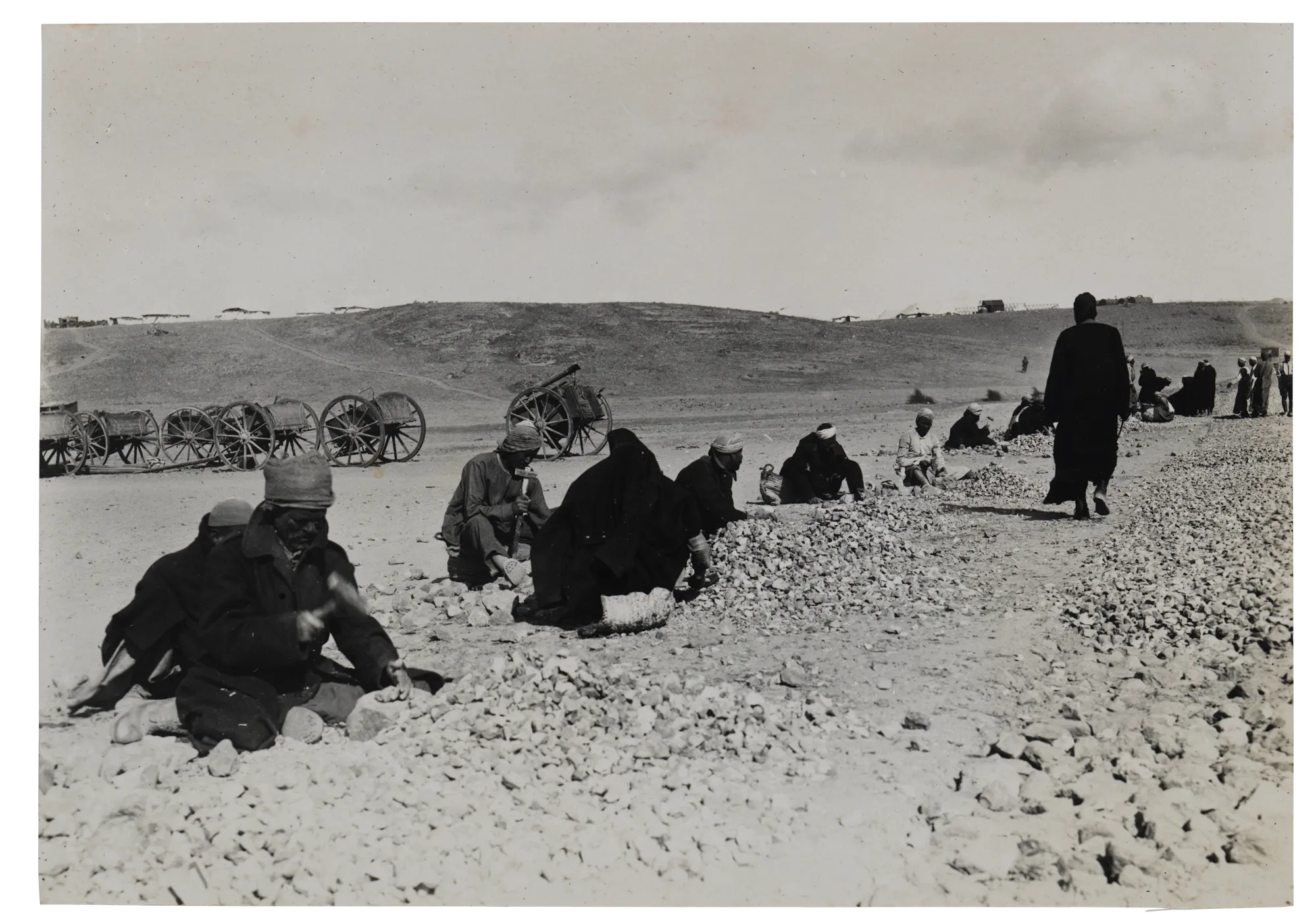
The expansion of the base at West Mudros included a road network to carry supplies, ambulances and personnel. On Turks Head Peninsula, the web of roads between piers, depots and facilities generally ran east–west.
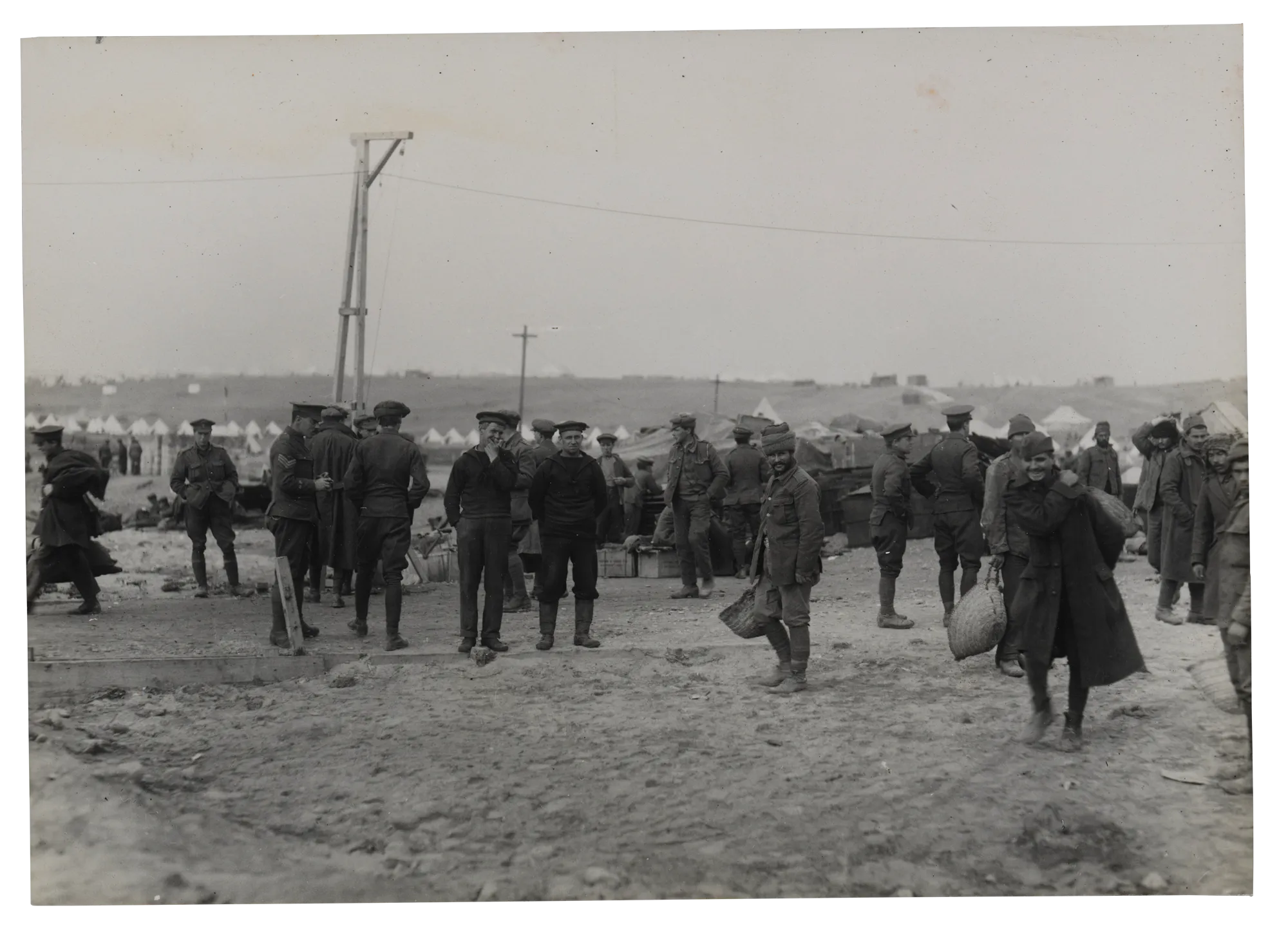
The Egyptian Labour Corps and prisoners of war from the Ottoman Army made most of the roads. The Greek Labour Corps also contributed to road making in West Mudros.

RAILWAY
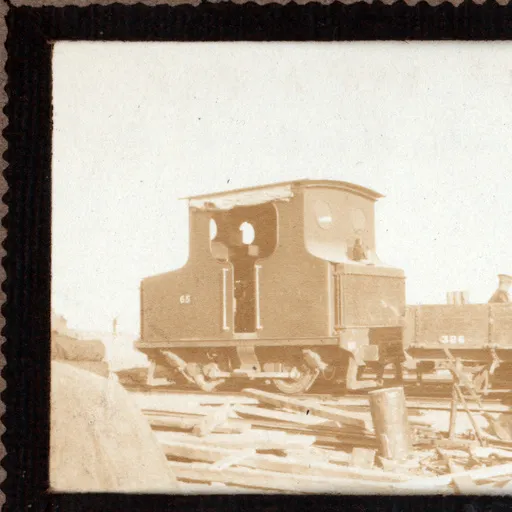
A small-gauge light railway was used as supply transport on Turks Head Peninsula. The British 117th Railway Company Royal Engineers built and operated the railway line, pier and depot.
Nine locomotives, as well as lengths of track and supplies, came ashore at Railway Pier in September to complete the system. The tracks ran east–west to connect Railway Pier with the later-built stone Supply Pier, and a branch ran north to the causeway. Due to the Gallipoli campaign ending, the plans to extend the line to Kontias village, where there were army camps, did not eventuate.
‘[The] railway line is well on the way and a funny little train is being used. When the rails are ready, it is to go right around the Island’.
– Staff Nurse Lucy Daw, quoted in Lemnos and Gallipoli Revealed, p. 44
POST AND TELEGRAPH
To operate as an advanced military base, Lemnos required a secure and reliable communications system. It had to connect with Allied command and the force at Gallipoli, as well as with the outside world.
The military used the existing telegraphic cable at Lemnos’s capital, Castro (now Myrina), which linked with Athens and Mudros town. When wireless telegraphy was introduced in March, it greatly enhanced the Allied communication capability.
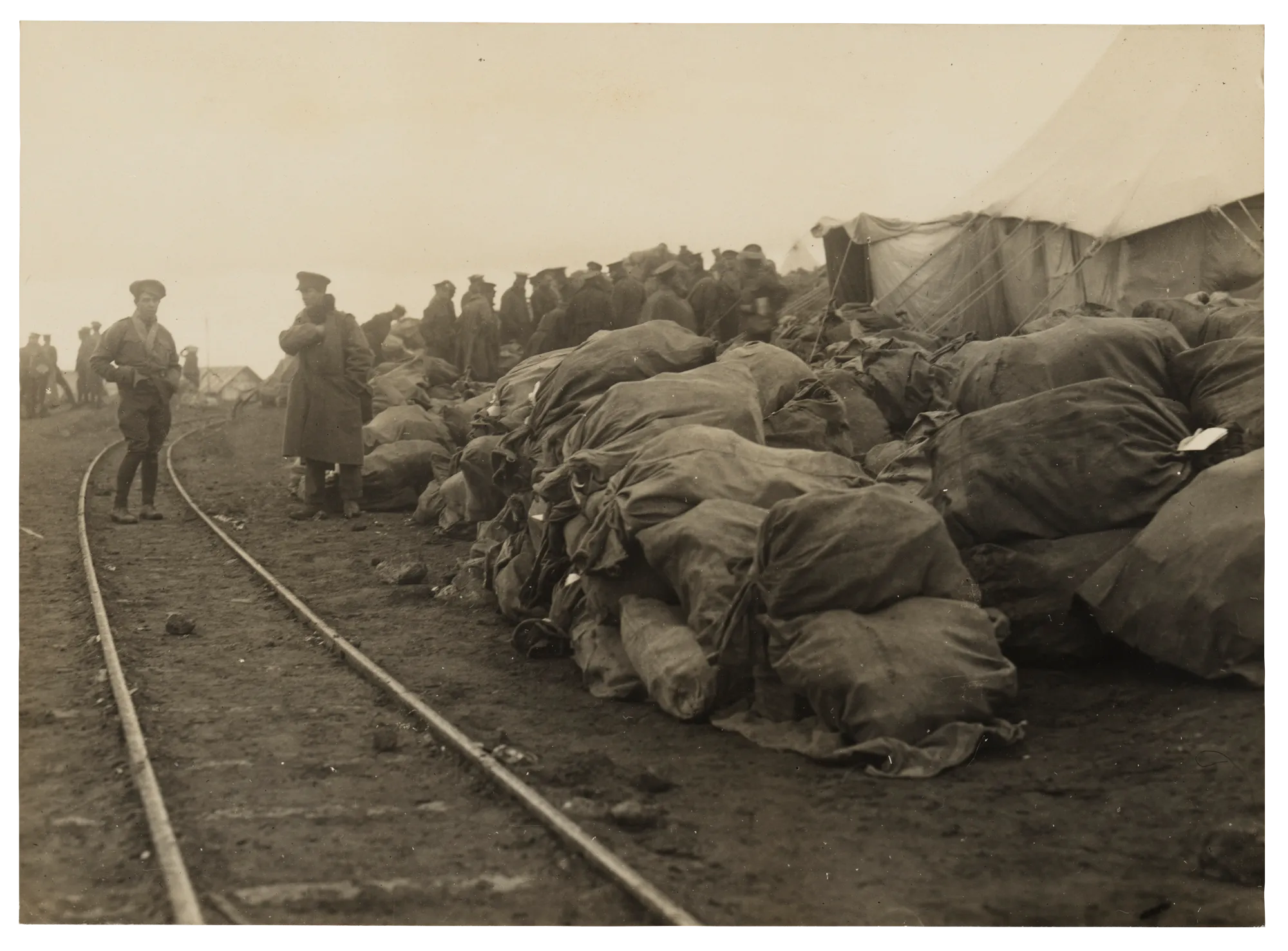
An Australian Army Postal Unit operated at Lemnos from May 1915 until January 1916. It was first stationed on the depot ship Aragon in the harbour but was later brought ashore. Once Sarpi Rest Camp was operating, mailbags were delivered to a post office there via Turks Head Peninsula.
The postal unit distributed mail to Imbros, Gallipoli and Alexandria. At a time when mail was the main form of communication, incoming letters from Australia were vital for buoying morale.
Staff handled hundreds of mailbags on Lemnos. Letters were delivered daily to Gallipoli, where word from home would have been welcome relief from the grind of battle.
‘There is nothing that cheers the soldiers up so much as letters from home. You see their eyes light up with pleasure as the postal orderlies toil up the hill with the mail bags. The postal corporal is the most popular man in the army.’
– ‘Trooper Bluegum’ (Lieutenant Oliver Hogue), Sydney Morning Herald, 15 Oct. 1915