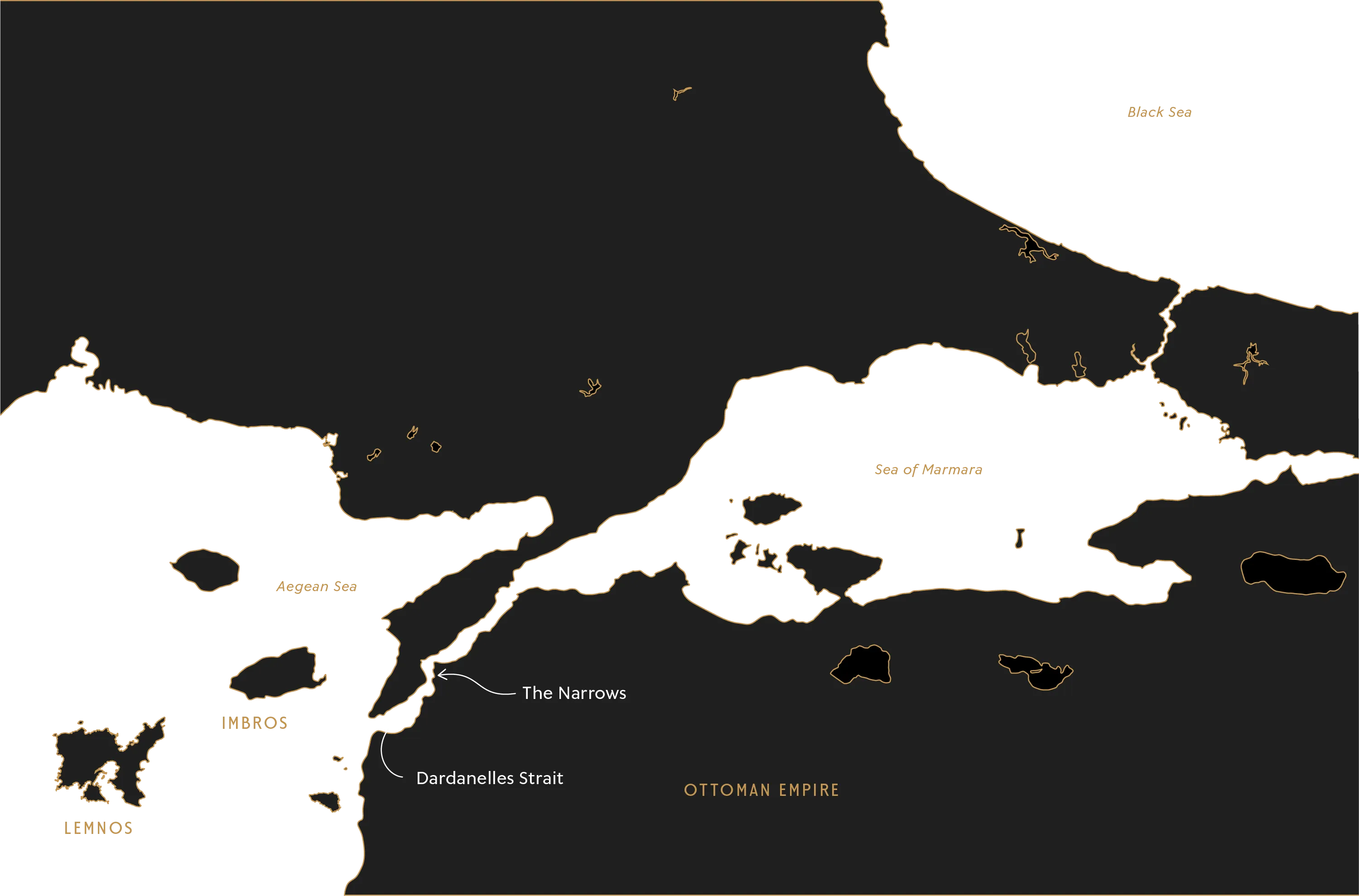
Allied naval assault on the Dardanelles
The Gallipoli campaign had its origins with a Russian request in January 1915 for help to take control of the Dardanelles strait. This would weaken the Ottomans, open a shipping route to the Black Sea from the Mediterranean and divert enemy forces from the Caucasus.
The British War Council decided to attempt this through naval force only. On 25 February, a small fleet of British and French warships was dispatched to shell the Turkish forts and batteries at the entrance to the strait. However, the well-prepared Ottomans withstood the assault.
The British and French intensified their efforts. A large fleet attempted, once again, to force the Narrows, inside the waterway’s entrance, and take the Dardanelles. After four days’ engagement, the Ottomans repelled the Allies on 18 March. Three of the great warships had been lost to sea mines and three others were badly damaged.
It became clear the Dardanelles could not be forced using naval vessels alone. Allied planning began for an amphibious assault.